
Strategy
Our business plan will allow us to reach not only girls but as many young children as possible to show them what real engineering can look like. We are focused on selling direct to parents for the quickest and simplest way to create an impact.
Current market landscape
A simple search of engineering toys for children will show you pages of “masculine” products, which fail to capture young girls’ attention or show the creativity which can be found within engineering.
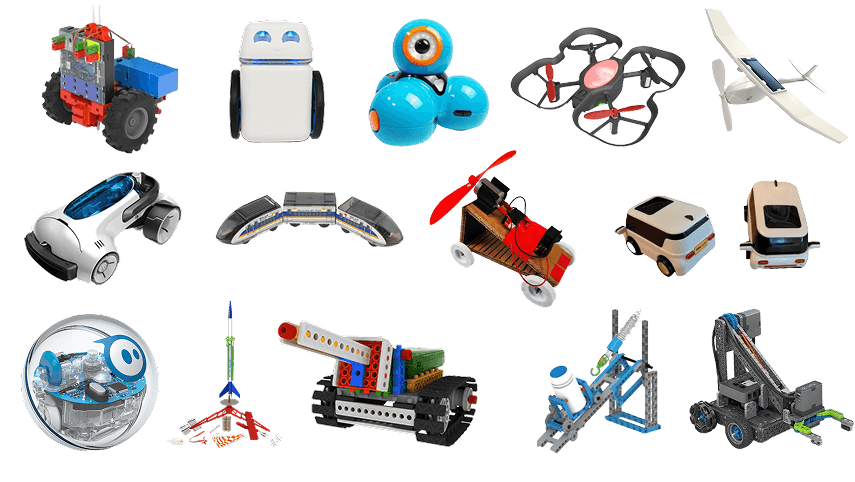
STEM toys were nearly 3 times more likely to be advertised to boys rather than girls
Institution of Engineering and Technology (IET) research and analysis of gendered toy marketing, reported by Sally Weale, The Guardian.
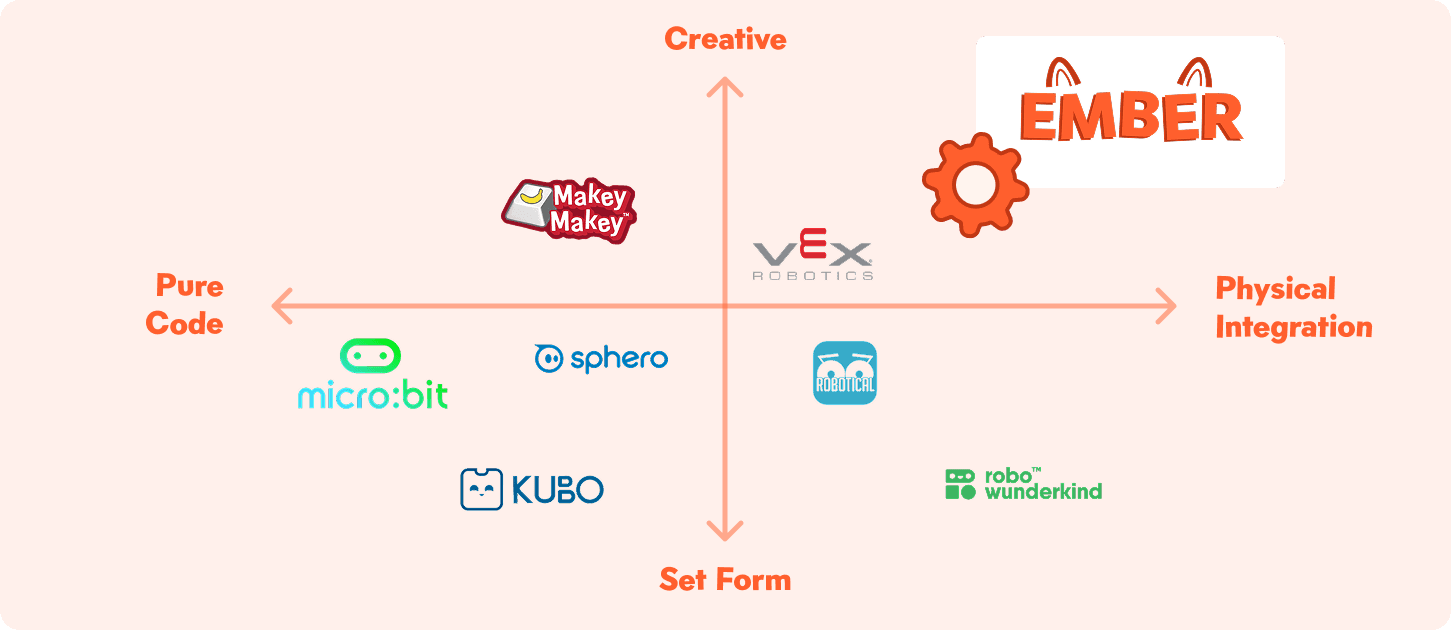
From speaking to teachers, outreach experts, and parents of young children, we know design opportunities are a way to reach those who might not be interested in STEM at first. We also know through our own experience as women who found a love for STEM that the best way to show the variety engineering has to offer is to bring both the physical mechanical systems and the technical coding together. This partnership of creative practical engineering distinguishes us from other emerging STEM educational toy brands.
Initial Interest
Through distributing flyers at the Science Museum in London and to school children during testing, we have already seen strong initial interest from our target market - parents with an existing inclination to encourage their children to explore STEM.

187 unique visitors to our website within 30 days

average session time of 1 minute 15 seconds
Social Media
Within one day of officially launching our page on Instagram, we observed an immediate interest with over 650 views of our content and over 50 followers.
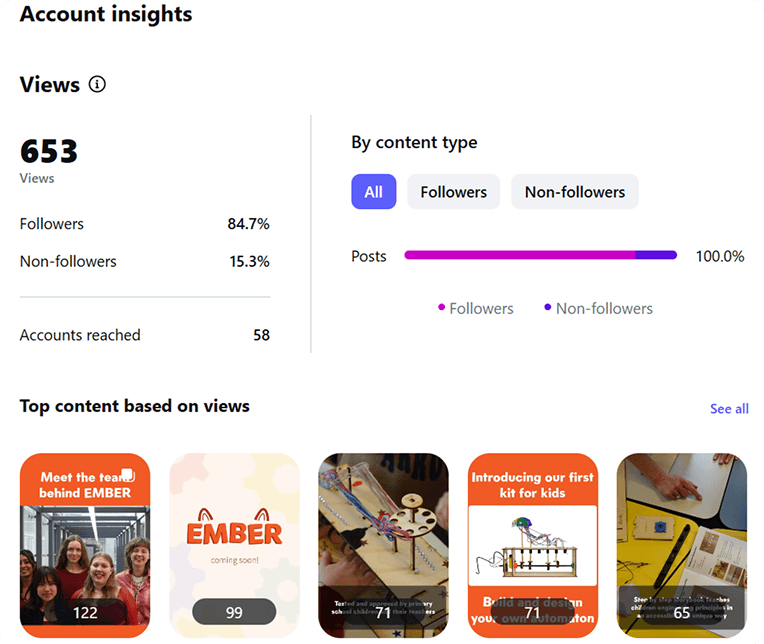
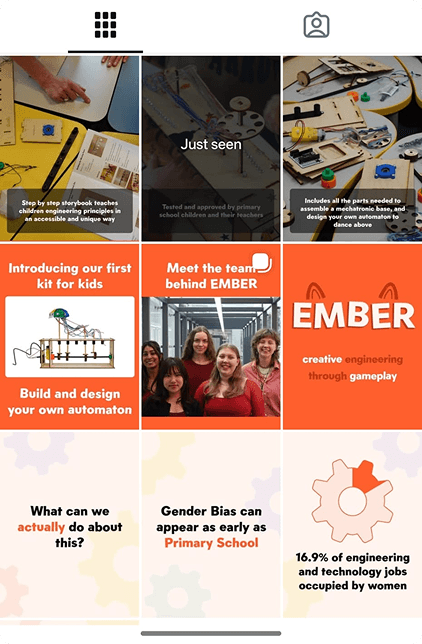
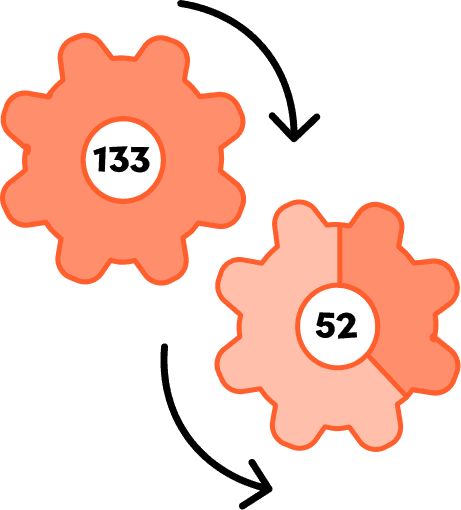
Converted nearly 40% of all page views into follows

Over 90 interactions with our posts in 24 hours
Partnerships with Local Schools
We have built up strong connections with several schools who have helped us with teacher interviews and in person testing with children age. This provides vital access to a large and diverse group of students for product development and validation going forwards.

We already have 6 schools working with us
From speaking to teachers, outreach experts, and parents of young children, we know design opportunities are a way to reach those who might not be interested in STEM at first. We also know through our own experience as women who found a love for STEM that the best way to show the variety engineering has to offer is to bring both the physical mechanical systems and the technical coding together. This partnership of creative practical engineering distinguishes us from other emerging STEM educational toy brands.
Our Route-To-Market
Selling direct to parents cuts out the middle man, and means we can start making an impact as fast as possible. We will market directly where modern day parents spend the majority of their time - on social media. After completing further user testing and refinement, and creating interest in our customer base, we will launch pre-sales for our first product
Now
Social Media
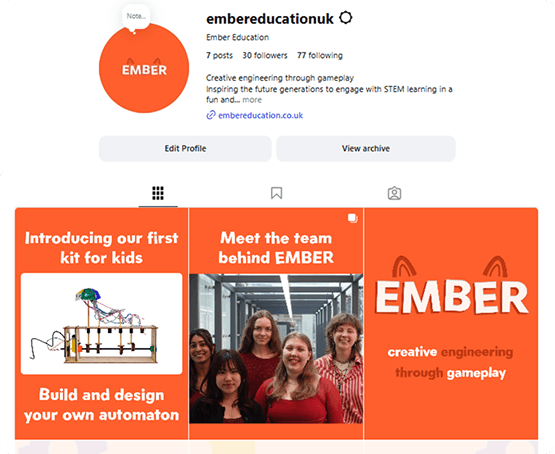
School Workshops
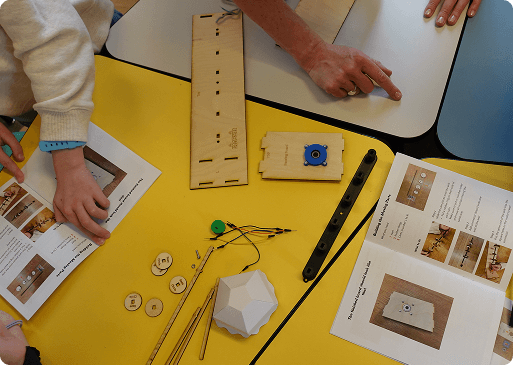
Pre-launch
Online Kickstarter Pre-Orders
Now
Product Launch
Influencer Partnerships
Using our initial income from pre-orders we can pay online parenting focused influencers to share and promote our product.
Sharing initial products with paid partners will create online hype and drive more paid customers to visit and purchase via our website.
Risk Assessment and Management
Our top three critical risks have been identified, and planned for to avoid significant damage to our business as we are starting up:
Risk
Impact
Likelihood
Score
Mitigation
Comments
Weak Product-Market Fit and Low Customer Lifetime Value (LTV)
A mismatch between market demand and product offering, insufficient retention rates, and no further demand from the same customer following initial purchase.


7/10
Early stage testing has shown promising feedback on product desirability and market fit.
Our kits are additionally designed to be built on with expansion sets, allowing new interactions to be created. This will encourage continuous purchasing and increase LTV.
Our expected total customer base is so large that even at low retention rates we should still turn a profit. Team Repair reported a 17% retention for their subscription during an interview, suggesting it is not a business ending problem in early stages
Unfavourable Unit Economics
Increase in COGS or manufacturing defects causing an increase in per-unit cost, thus a decrease in profit margins.

8/10
Early prototypes will be produced in house, to reduce reliance on third-parties when funds are limited. Initial small scale runs and pre-orders will further minimise the financial impact of any manufacturing failures or rising COGS.
As production scales, manufacturing methods will be optimised for efficiency to reduce unit costs, and relationships with multiple suppliers will be built to mitigate dependency and reduce the consequences of price volatility.
As initial production volumes will stay low, we can identify and resolve manufacturing issues before scaling up. In addition, all current parts can be produced with standard rapid prototyping equipment which do not require expensive tooling costs until we reach our target production rate in our third year, at which point we should have enough funding to start the tooling process.
High Customer Acquisition Costs (CAC)
Low cost marketing fails to generate sufficient engagement or conversions, and alternative marketing strategies must be employed, leading to higher CAC than projected.
6/10
Implementing data analytics in our marketing will allow for live observations of the advertising approach and mean unsuccessful campaigns can be stopped before wasting large amounts of money. In addition, it is fast and easy to trial multiple acquisition channels across different social media platforms and digital ads, meaning data from initial marketing can inform the best strategy to invest in.
Starting with a basic social media presence with analytics is free and won’t negatively detriment the business if it fails. A broad and cheap approach means we can iterate through strategies rapidly with minimal risk before identifying our final methods, thus limiting the risk of sustained high CAC.