
Assumptions and Insights
We systematically mapped our core hypotheses against two criteria: level of uncertainty and potential risk to the business. From this analysis, we identified five critical product and business assumptions that required testing.
Assumption Mapping
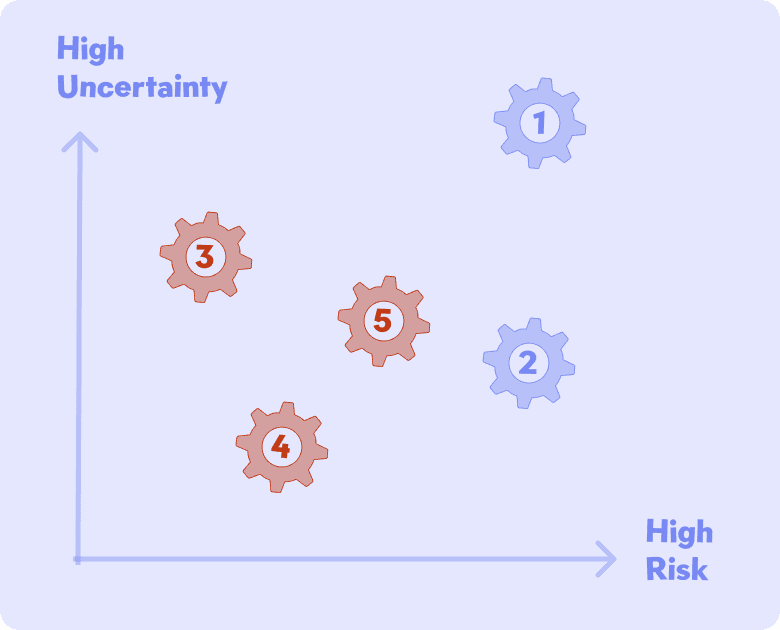

We assume STEM-oriented parents of primary-aged children represent our initial beachhead market.

We assume these parents are willing to purchase a creative engineering kit for home use.

We assume parents will accept structured screen use when it is positioned as productive and educational.

We assume children demonstrate increased enthusiasm and confidence towards engineering after building our kit

We assume integrating storytelling into the learning experience increases engagement and sustained interaction
Method Overviews
We then designed targeted validation activities to test each assumption using a range of research and prototyping methods. For each assumption, we outline the rationale, evidence gathered, key insights, and how the findings directly informed the next stage of Ember’s development. Click below for more information about each method.
We assume STEM-oriented parents of primary-aged children represent our initial beachhead market.
Ember aims to create more STEM opportunities for children, but our early traction will rely on targeting a reachable customer segment. STEM-oriented parents are more likely to value educational enrichment and invest in learning-based products for their children. Validating this assumption will inform Ember’s go-to-market positioning and customer acquisition strategy.
Evidence
Pre-sale sign ups
Flyers to sign up to our newsletter were given out at the science museum and the traffic to the website was analysed.
35
Flyers
Handed our at the Science Museum
14
People
Signed up to our newsletter.
40%
Of people who picked up a flyer signed up to our newsletter
5
People gave us their email without taking a flyer
Pre-order sign ups and post MVP trials
After our MVP trials in schools, flyers to our A/B price testing and newsletter were sent to parents, and the traffic post this test was analysed.
32
Flyers
Handed out in schools
12
People
Accessed our website after this
37%
Parents of children who participated in our workshop visited the website.
12
Clicks
in total on the A/B price testing options were recorded in the days after handing out flyers in schools
User Interviews
We conducted user interviews with STEM oriented parents to assess their interest in Ember and willingness to purchase our kit.
Chris Terpos
Stay at home dad
Studied mechanical engineering
Product manager
Andrew McPherson
Studied mechanical engineering
Lecturer at Imperial College London
Rakhee Patel-Devalia
Stay at home mum
Works as a CRM consultant for Microsoft
From our interviews, we found that parents working in STEM-related industries were keen to expose their children to STEM focused activities from an early age and were highly invested in supporting their child's educational development outside the classroom, through extra curriculars.
Key Insights
Parents were particularly interested in the product once we mentioned were were trying to make engineering more gender inclusive.
Parents became more interested in the product if they knew their child or another child had enjoyed the activity.
Next Steps
The gender neutral aspect of Ember will be emphasised more, not only when marketing Ember, but also with future developments.
Another way to market Ember will be through word of mouth, and children sharing their experiences with Ember with their friends and family.
We will be focusing on targeting parents who are also involved in the STEM industry, to build initial traction for Ember.
We assume these parents are willing to purchase a creative engineering kit for home use.
Ember’s commercial viability will depend the on educational and developmental value parents perceive in the product. If parents are not willing to pay for a creative engineering kit at our intended price point, the business model would require adjustment. It is important to validate this assumption to inform pricing, positioning, and perceived value.
Evidence
Pre-order sign ups
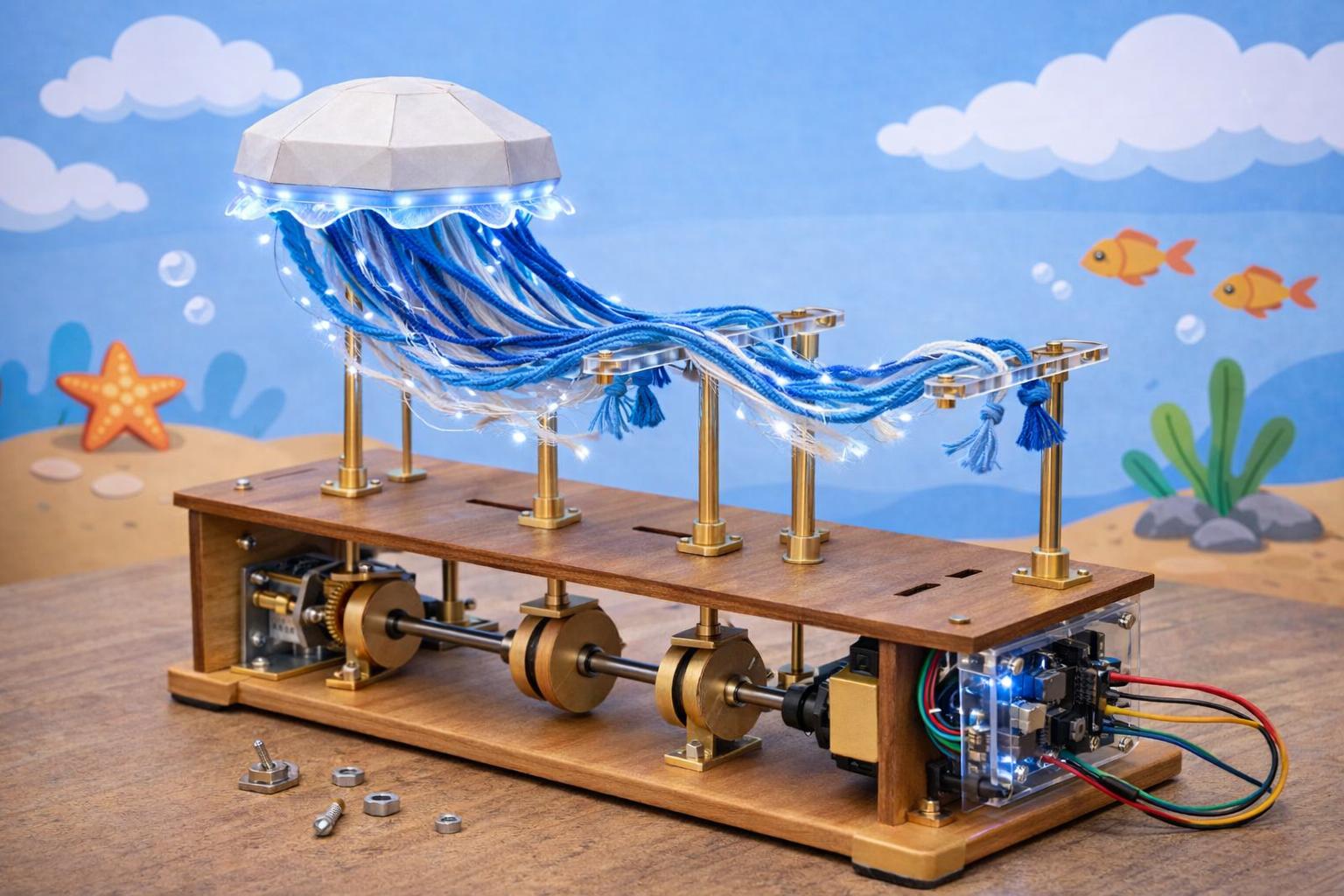
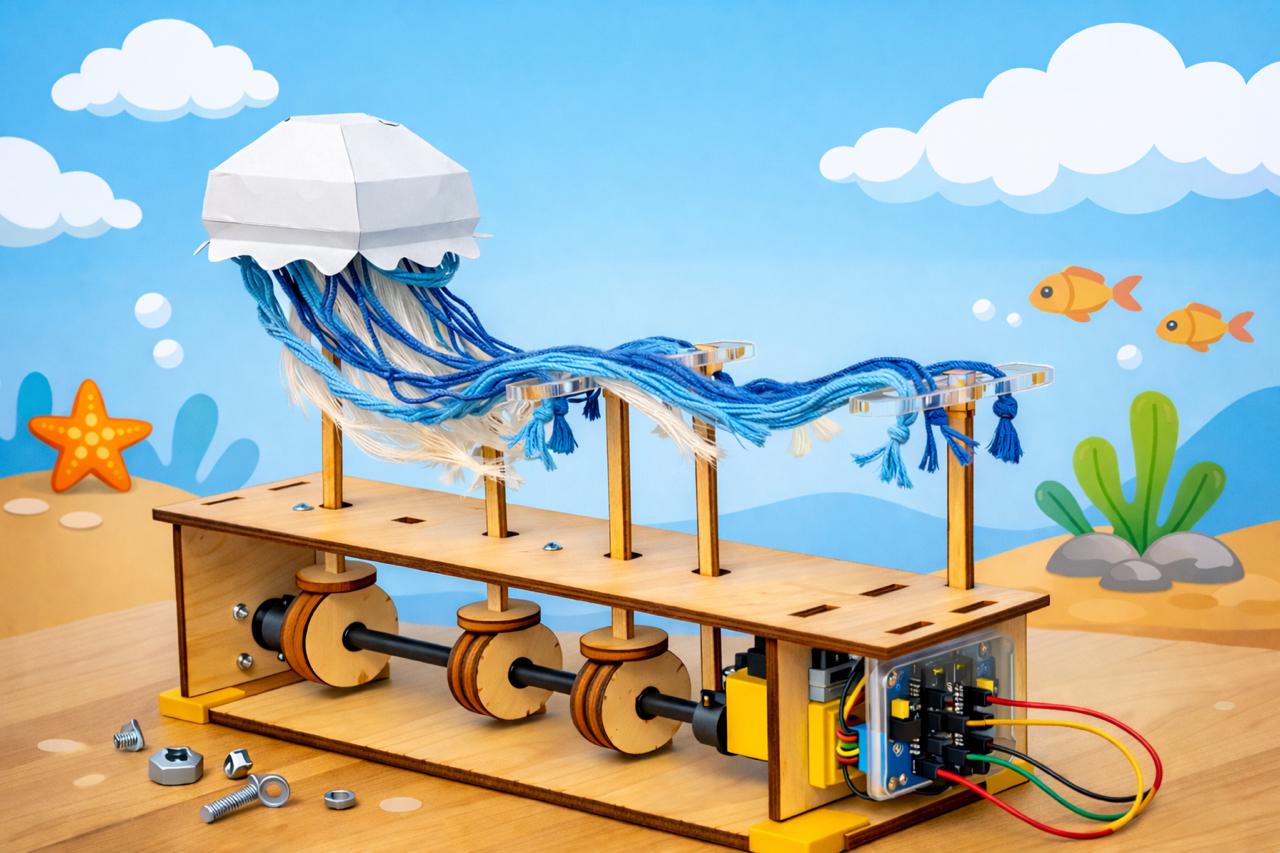
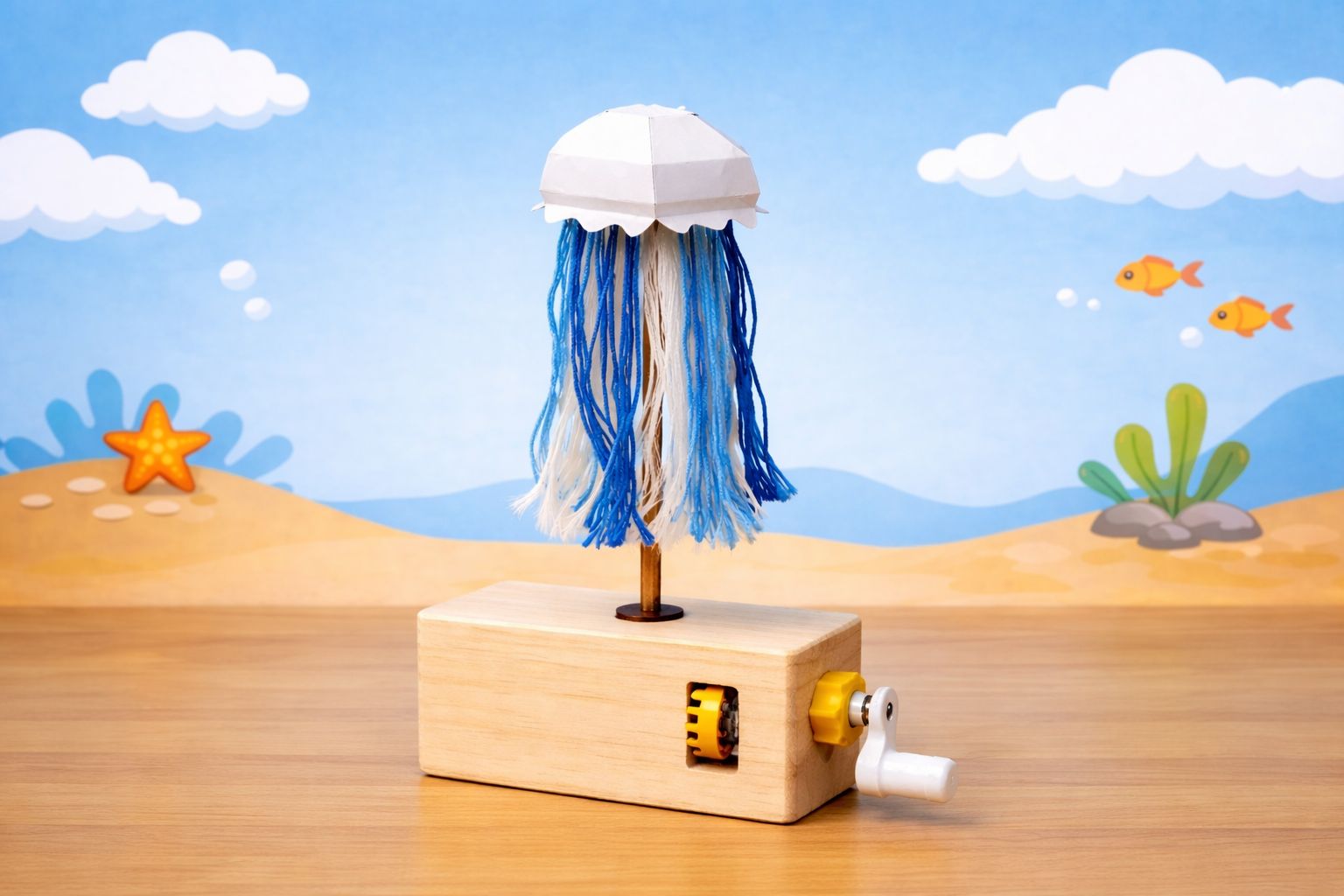
We conducted A/B price testing to better understand the price point parents were willing to spend on our product.
6
Clicks
Deluxe version
9
Clicks
Standard version
6
Clicks
Mini version
43%
Of the 21 clicks were for the standard pricing, which validates the price point of our product.
User Interviews
We conducted interviews with parents to better understand how they approach purchasing educational and STEM-related toys for their children.
Chris Terpos
Based in the Netherlands
Father to 2 daughters under 8 years old
There is so much garbage out there claiming to be STEM, you really don’t know
We got a solar powered robot that she could build. It was €25, which is cheap for what it is… but when it doesn’t work properly, it pushes them away.
We had an electrical experiment kit for €50, but the cardboard base felt like they could have done a better job.
We paid €120 for Turing Tumble. It’s expensive, but you can see where the money went.
Andrew McPherson
Based in the UK
Father to a 6 year old son
I’d probably rather spend a few pounds more to have something that seems like it has some sort of educational value.
What would make me think twice about buying something expensive is… you put the kit together, it’s entertaining for the four hours it took, and then it’s forgotten — one more piece of clutter.
My parents bought this R2D2 robot… from Argos… it cost about £60… you could see why it would cost more because of the complexity.
Rakhee Patel-Devalia
Based in the UK
Mother to 2 daughters and a son under 12
I’d say between £5 and £30, but because I’ve got three children, it’s usually between £5 and £20. If it’s something really good and worth it, then I would pay up to £30 for a birthday gift.
Things that are three-in-one are quite good because it’s not just one activity — you can chop and change it.
Quality is always important — not something that’s cheaply made if you’re going to spend £30 on it.
This STEM spider thing I bought — he built it in about 15 minutes and it moved, but it broke within two weeks.
Our findings suggested that parents would spend money within the £10 - £50 price bracket on educational toys, with higher spending more likely for birthdays or special occasions. Parents emphasised the importance of quality and longevity, expressing reluctance to purchase products that would only entertain their child for a short period. They would prefer to spend money on toys/kits that have multiple activities and sustain engagement for a couple hours or multiple "play" sessions. Likewise they also weren't willing to spend money on something that would break after a few uses, because it would not only be a waste of money, but could discourage their child from engaging in similar activities in the future. The quality of the build and materials were considered important, especially the use of natural materials over synthetic ones.
Key Insights
Quality of the product is important justification that influences spending habits. Parents like it if the product appears to have been made from higher quality materials.
Parents were more willing to spend money on an "expensive" toy or kit if they knew it would entertain their child for longer periods of time and multiple sessions.
Next Steps
Ember will be priced at £30, validated by our P&L statement and assumption testing.
The multiple steps to the kit, and its ability to entertain children for longer periods of time will be marketed to parents to justify spending their money on Ember.
Ember will continue to use high quality, natural materials for the majority of our products and will prioritise this.
We assume parents will accept structured screen use when it is positioned as productive and educational.
The kit integrates guided digital elements to support the coding aspect. However, parental concerns around screen time may present a barrier to adoption. Testing this assumption ensures our product design aligns with parental attitudes concerning screentime and helps us determine how we communicate the educational value of the digital component.
Evidence
To ensure Ember accommodates a range of parenting styles, we conducted interviews to understand parental attitudes toward screen time.
Chris Terpos
Based in the Netherlands
Father to 2 daughters under 8 years old
“The stereotype of the geek with the glasses isn’t there, and I’m not trying to turn them into a geek. I know the results I’m aiming for which is that lightbulb moment, type of thinking.”
Screen time is very controlled. They watch like 2 hours of filtered screentime a week, but for games on the phone that is controlled. My daughter only has 10 to 15 mins a day of screentime to play a maths game on Duolingo.
Any sort of interactive screentime is purely educational. I've showed them the purple space program but there wasn't that much interest from them.
I’d give it a shot — but the screen would initially make me hesitate. The coding is nice and is the reason I bought the Turing tumble, but the screen would initially put me off.
Andrew McPherson
Based in the UK
Father to a 6 year old son
You’ll find all possible answers to [screen time]. We’re not—screen time is not a hill that we die on.
We do let him watch videos… for a little bit of time each day, usually parcelled out as little rewards.
He actually likes the screeniness of it — he likes the connection between the screen and the physical thing and what it lets you do.
For me, screen or no screen is not the biggest story. It’s: is there some sort of curious, inquisitive exploration going on, or is it just passive reception of whatever media?
I don’t feel like that’s entirely unwholesome… using a screen as a way of trying to figure out how to make the robot do what it wants it to do.
Rakhee Patel-Devalia
Based in the UK
Mother to 2 daughters and a son under 12
We’re quite strict about screen time in our house. We keep screen time minimal because they’ll argue over the iPad.
A bit of screen time to learn something or build a skill is fine — that’s the way things are going anyway. Her homework from school is online now — maths and things — so they’re already using screens for learning.
What we don’t like is when it’s stupid games or online games with chat and messaging. That’s what we don’t allow.
There’s nothing wrong with a bit of coding and screen time. It would probably appeal more to children aged nine or ten and above. For younger kids it’s more about arts and crafts and building things.
From our interviews it is clear that while most parents aim to limit screen use for their children, the extent of this varies between households. However, there was a clear trend, parents are more accepting of screen time when it is purposeful and educational. Many expressed a willingness for their children to engage with digital activities if they support learning, creativity, or skill development.
Key Insights
Products that function without screens but offer optional digital extensions are more likely to appeal to a wider range of parents.
Parents are not inherently opposed to screen use, but they strongly prefer educational or skill-building interactions over passive consumption.
Parents prefer physical interactions over digital ones. There is value placed on the children being hands on with the toys/kits and activities they engage with.
Next Steps
To maximise appeal across different parenting preferences within our beachhead market, Ember’s digital coding functionality will be positioned as a bonus feature rather than a core requirement. This ensures the product remains accessible to parents who prefer limited screen exposure, while still providing opportunities for children to explore coding and digital interaction as they grow.
Future product development will prioritise Ember’s mechanical, electronic, and creative building elements, reinforcing the product’s hands-on learning experience. This maintains a focus on the physical interactions the kit provides and aligns with parental values surrounding tangible, creative activities for their children.
We assume children demonstrate increased enthusiasm and confidence toward engineering after using the kit.
Ember’s mission is to positively influence early perceptions of engineering. We want to ensure the product has a long-term positive impact on enthusiasm and interest. Validating this assumption strengthens both our impact value proposition and our credibility with parents and future institutional partners.
Evidence
We conducted two rounds of MVP testing with children in schools in London. To understand how their views on engineering changed from the workshop, we asked them what they thought engineering was before and after. We also asked them to fill out a feedback form, asking what they thought about the kit.
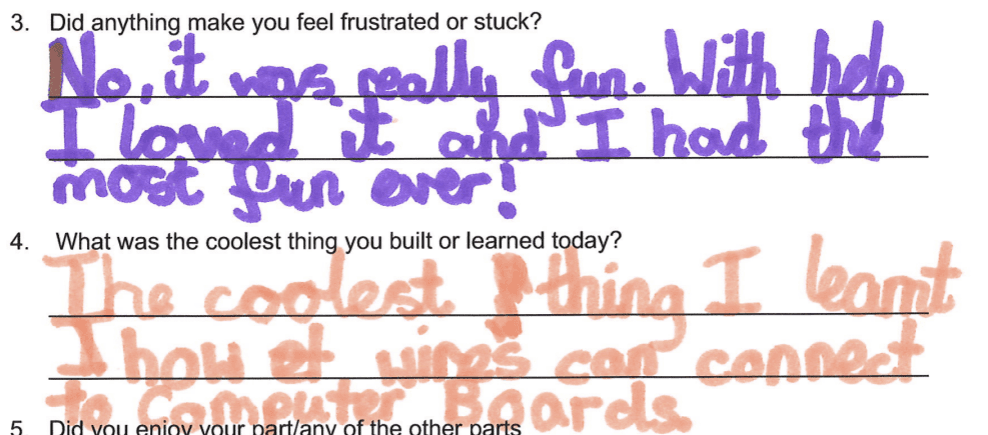
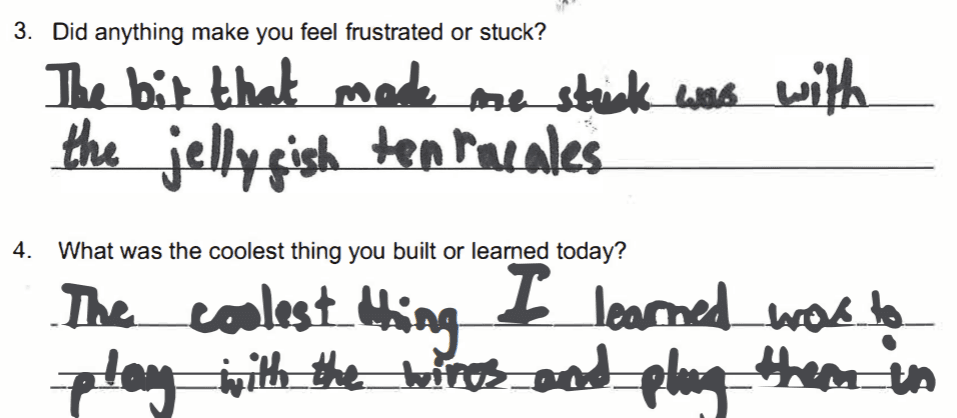
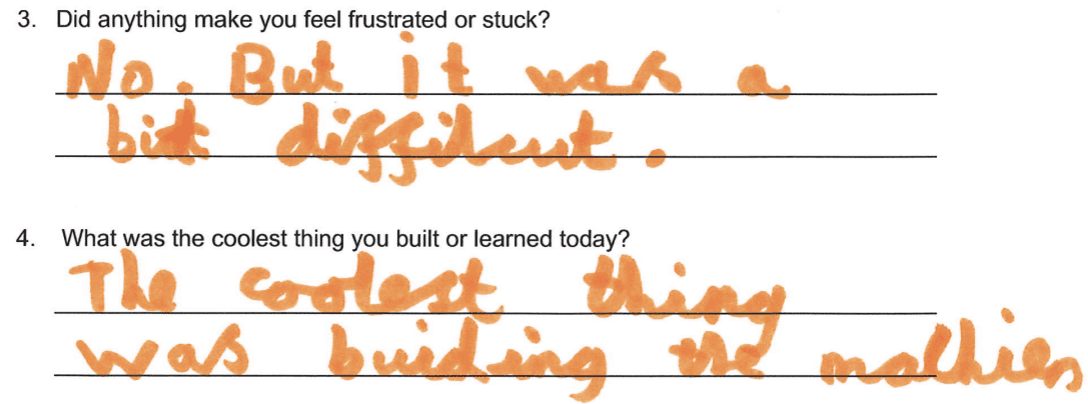
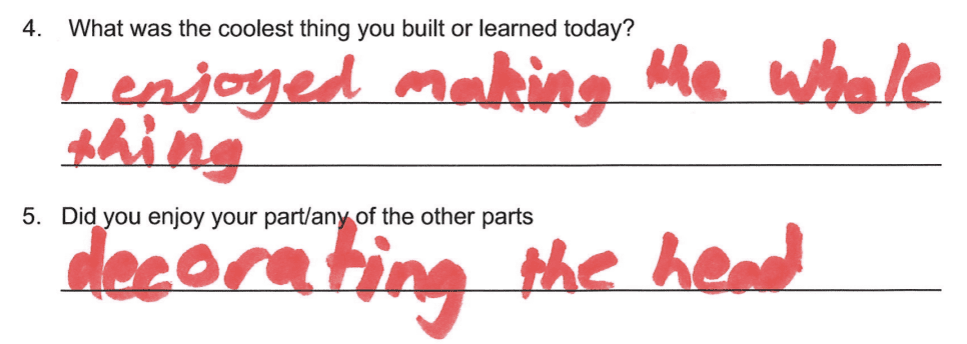
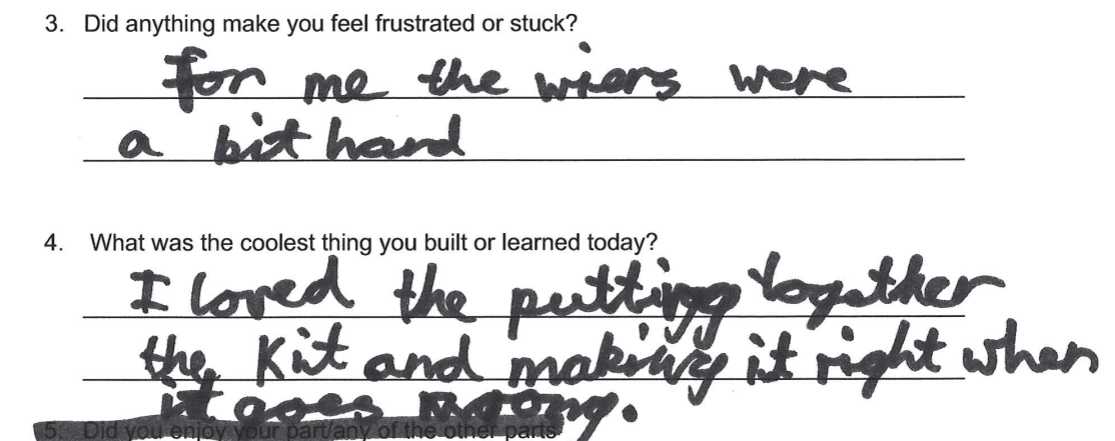
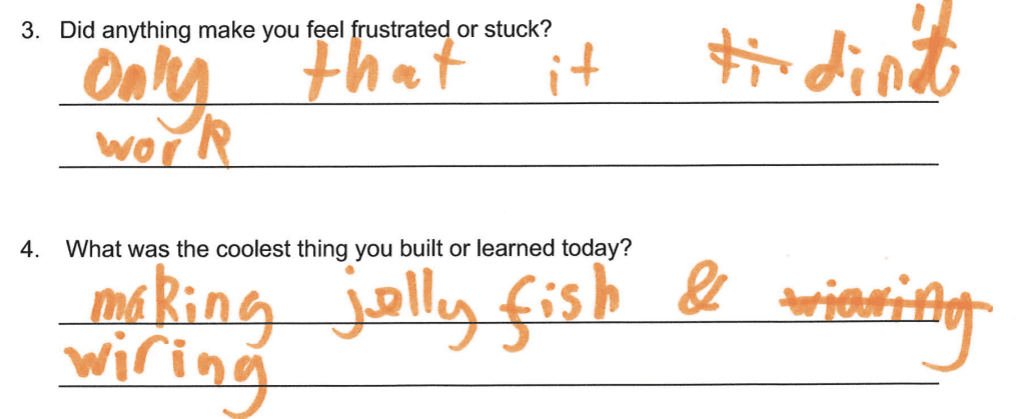
At the beginning and end of each session, we asked children what they thought engineering was. Initially, many described engineering in terms of building or cars. By the end of the activity, more children began to describe the creative aspects of engineering. Throughout the sessions, the children were quite engaged with the kit and were eager to continue working even after an hour. Their sustained engagement indicated that the kit successfully captured their interest and increased their enthusiasm towards engineering as the session progressed.
Key Insights
The children were quite excited about designing the jellyfish on top, and really enjoyed decorating the top part.
The children were more enthusiastic and interested in the electronics aspect of the kit, because it was something they hadn't done before.
Next Steps
We will prioritise further development of Ember’s electronics features, introducing additional functionality to expand the interactive elements of the kit.
We will also explore opportunities to incorporate more design-focused activities beyond the top section of the automata, while developing additional nets to support further creative customisation.
We assume integrating storytelling into the learning experience increases engagement and sustained interaction.
Storytelling is a key differentiator between Ember and traditional STEM kits for children. If this approach does not increase attention, enjoyment, and sustained interaction, the learning experience may not achieve its intended behavioural impact. Testing this assumption ensures resources are focused on features that deliver both impact and competitive advantage.
Evidence
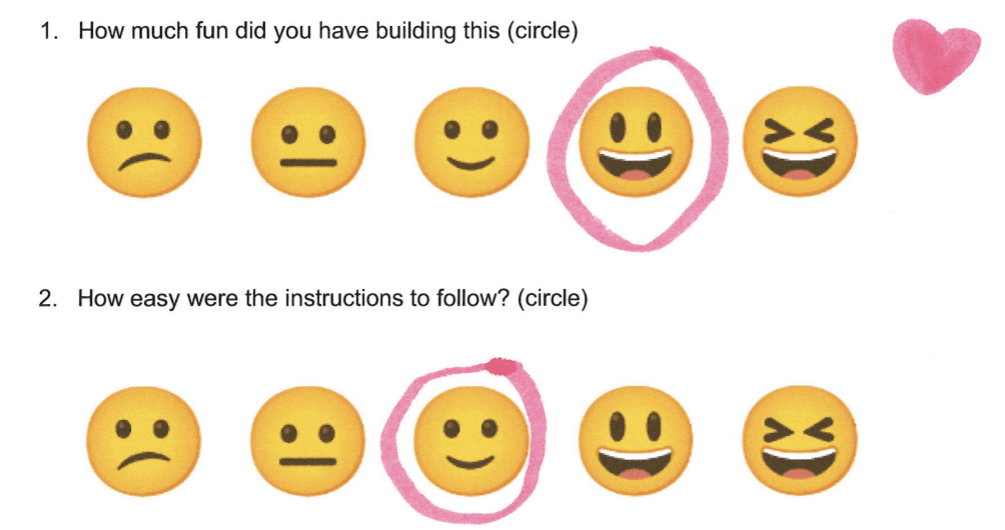
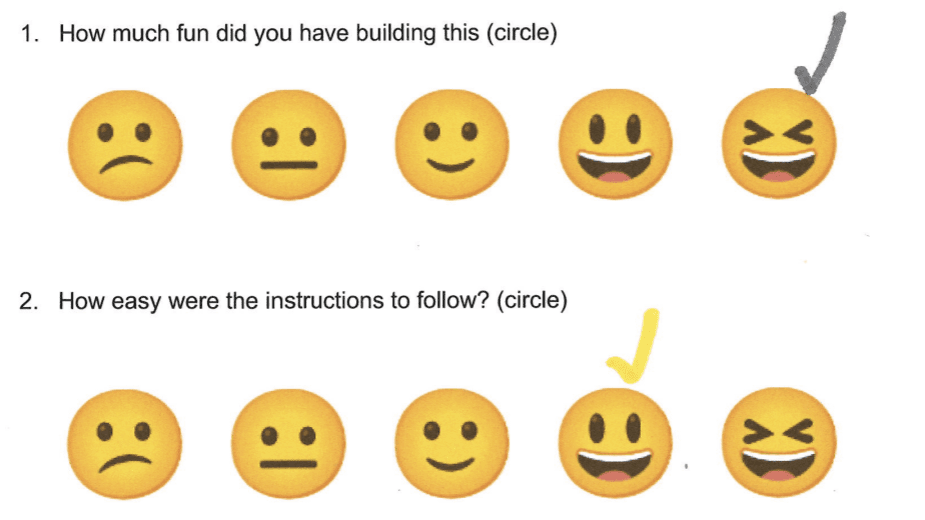
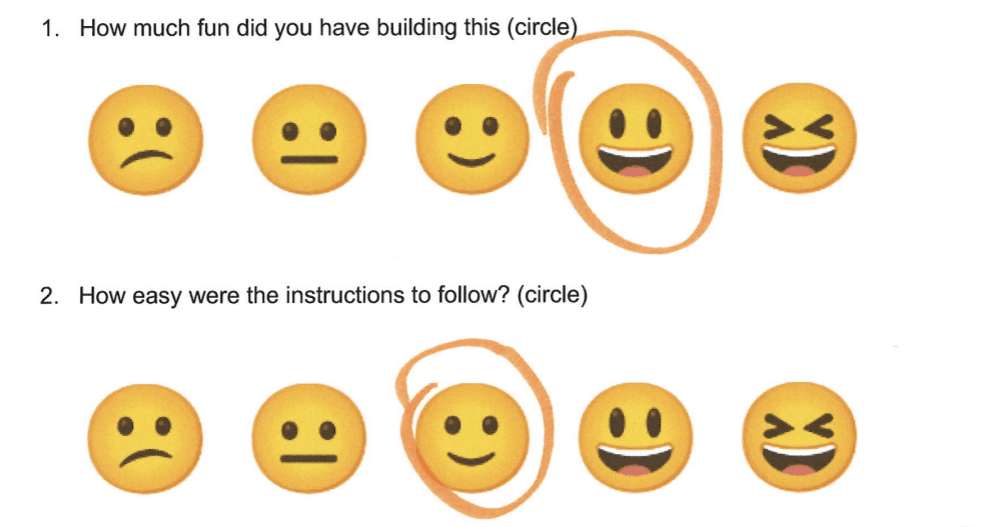
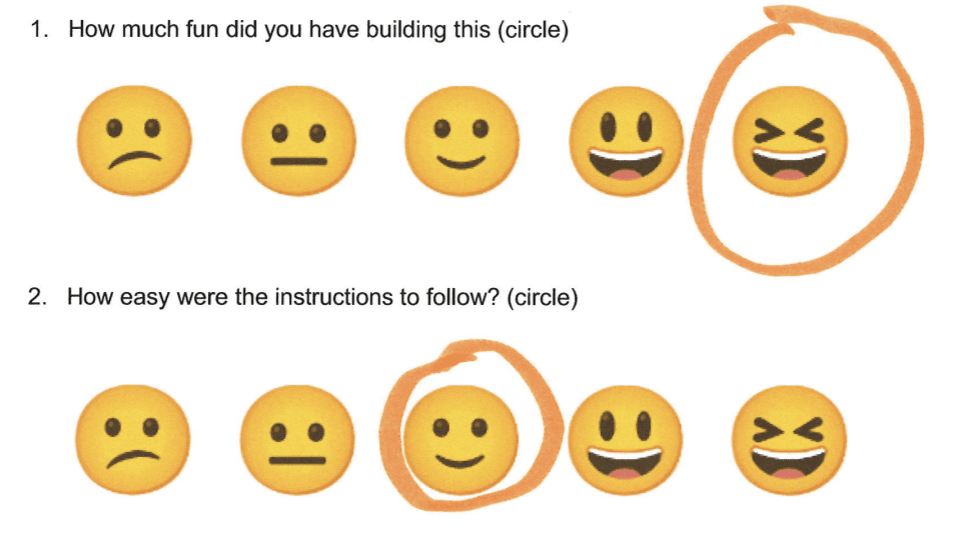
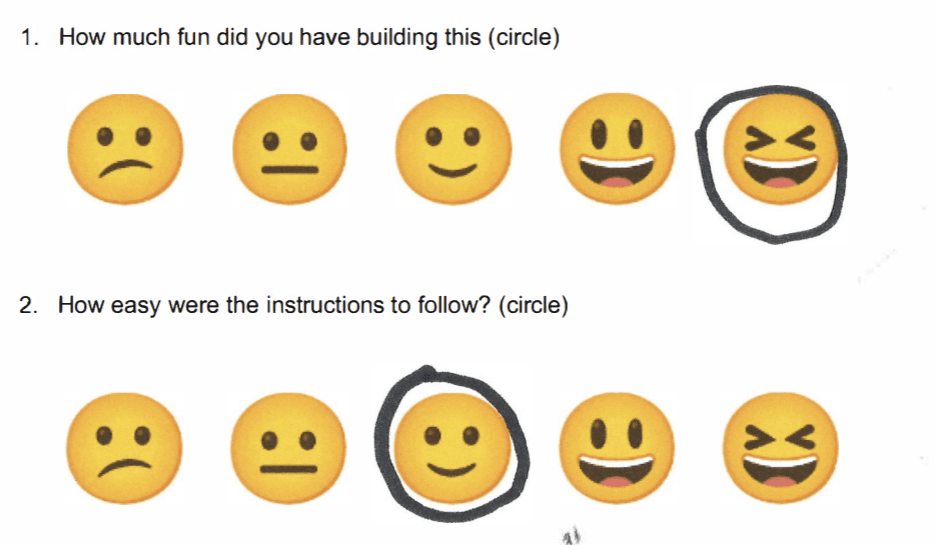
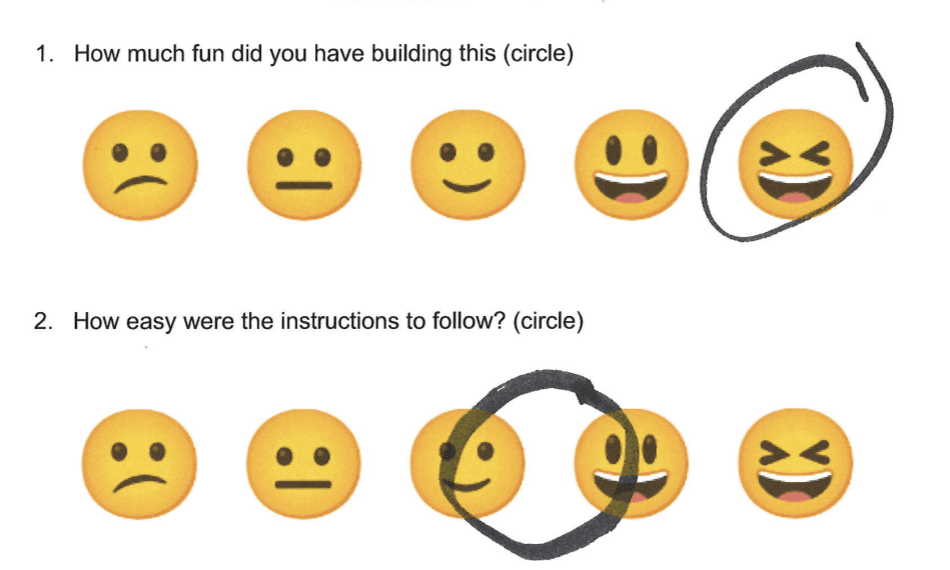
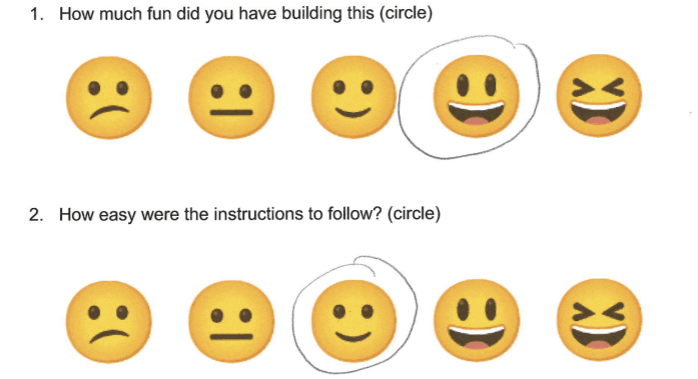
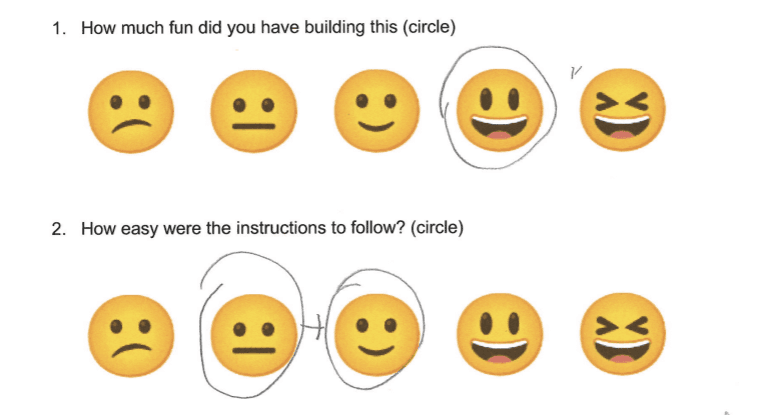
We designed a storyline to incorporate into the instructions, to assess whether it would make the instructions clearer and more engaging for the children to learn the different engineering concepts. The children ranked how much fun they had building the kit, and how easy the instructions were to follow.
NLCS
Instructions without the story
Instructions with the story
Ecole Francaise Jacques Prevert
Instructions without the story
Instructions with the story
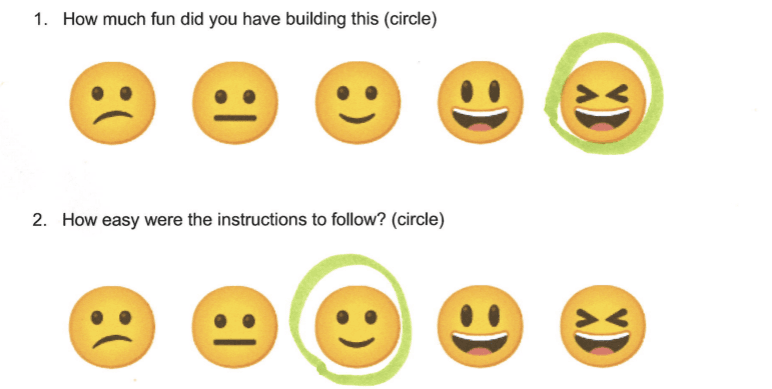
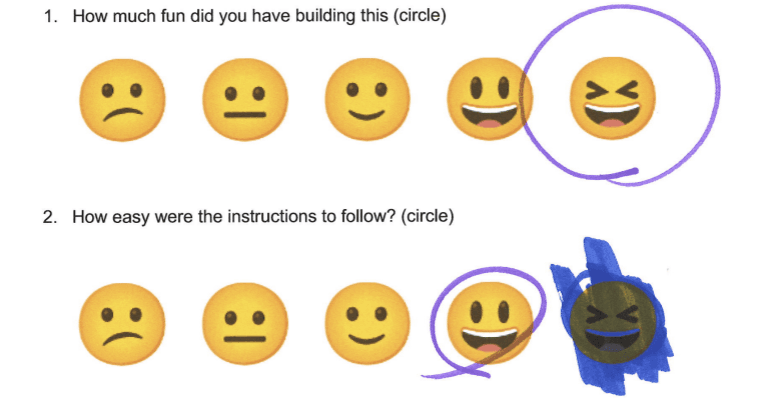
Feedback from the post-session forms suggested that the inclusion of a story did not significantly affect the children’s ability to follow or understand the instructions. However, it did have a clear impact on engagement. Children using the story-based instructions consistently reported finding the activity more enjoyable and engaging.
In one case, when asked what she had learned, one child was able to explain the engineering concepts behind the automata while also recounting the whole storyline. This suggested that the narrative element helped improve the learning experience by making the activity more memorable and immersive.
Key Insights
The storyline provided more context to the activity and helped with the children's understanding and engagement with the engineering concepts.
Regardless of the storyline, the children had similar ability levels with following the instructions and would need to ask for help when needed.
Next Steps
As future kits and add-ons are developed, the storyline will continue to evolve, creating a connected narrative experience across Ember's product range.
The instructions will also be refined to ensure they are clear and accessible for children to follow independently, while enabling parents to support their child where needed.